


The whole backyard just became the deep end.
1,236 gallons. Tool-free setup. Swimming the same afternoon it arrives.
Get yours today30-day guarantee. Questions? support@renwold.com
Built for the summers you actually want.
Swimming the same day
No contractors, no digging, no waiting weeks. Frame up, liner in, fill, swim.
Holds up all season
Corrosion-resistant steel and a 3-layer puncture-resistant liner that laughs off pool toys.
Nothing else to buy
Filter pump, hoses, and cartridge are all in the box. It works the moment it's full.
Fits the whole family
10 feet across and 30 inches deep - room for the kids, the dog, and a float or two.
Steel frame. Puncture-proof liner.
A frame that clicks together by hand and stays standing all season.
Three layers of Tritech that shrug off punctures standard PVC can't.
Three steps. One afternoon.
Lock the frame
FrameLink joints click into place by hand - no tools, no hardware to lose in the grass.
Fit the liner
The Tritech liner stretches over the frame and locks in at the top rail.
Fill and filter
Connect the included 330 GPH pump and hoses, fill it up, and you're swimming today.
Everything you need to know before the first swim.
Pick a flat, level patch of ground. This matters more than anything else - a pool on a slope puts uneven pressure on the frame and can push water over one side. Clear away rocks, roots, and sticks, since anything sharp underfoot works against the liner over time. Grass is fine, but a ground cloth or tarp underneath adds a useful layer of protection. Keep the pool away from overhead power lines and low branches, and give yourself enough room to walk all the way around it.
One thing people forget: a filled pool is extremely heavy. Once it's up, it isn't moving. Be sure about the spot before you fill it.
Lay the liner out flat in the sun for a while first - it relaxes the material and makes everything easier to work with. Then connect the frame poles using the FrameLink joints. They're built to click together by hand, so if a joint is fighting you, it's almost always in the wrong position rather than needing force.
Work your way around the circle, seating each connection fully before moving to the next. Two people makes this much easier than one, though it's manageable alone.
Spread the liner inside the frame and smooth out the wrinkles from the center outward. Take your time here - creases left in the bottom tend to stay there once the water goes in. Line up the liner so the pump inlet and outlet openings sit where you want the pump to live.
Secure the liner to the top rail all the way around, keeping the tension even so no single section is pulling harder than the rest.
Place the pump on level ground beside the pool, below the water line. Attach one hose from the pool outlet to the pump inlet, and the second hose from the pump outlet back to the pool inlet. Hand-tighten the connections - snug is enough, and overtightening can damage the fittings.
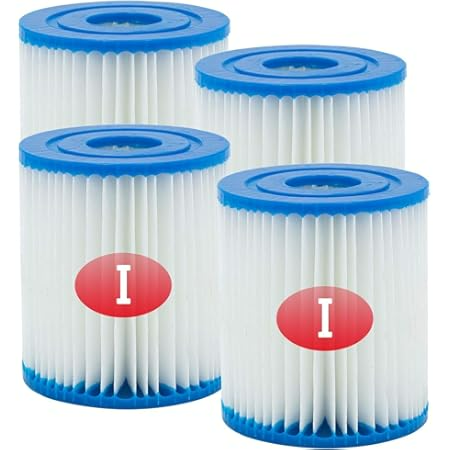
Slot the Type I cartridge into the pump housing before you run it. Leave the pump switched off until the pool is filled; running it dry can damage the motor.
Add a few inches of water first and check that the bottom is sitting flat, smoothing out any wrinkles you find while it's still easy to do. Then keep filling to the fill line marked on the wall - not above it.
With a standard garden hose, expect this to take a few hours. Once it's full, check the hose connections for drips, then switch the pump on. Water should start circulating within a minute or two.
Run the filter pump daily - most people find several hours a day keeps the water clear. Rinse the cartridge regularly and replace it when it stops looking clean after a rinse. Skim leaves and debris off the surface as you go; it's far less work than dealing with them once they sink.
A cover between swims cuts down debris and slows evaporation. Test and balance the water chemistry regularly - clear water isn't the same as clean water.
If your winters freeze, drain the pool before the first hard freeze - trapped water expands as it freezes and that's what cracks frames and splits liners. Use the flow control drain valve to empty it, then let the liner dry completely before folding. Storing it even slightly damp invites mildew.
Keep the frame, liner, and pump somewhere dry and out of direct sun. In warm climates with no freezing, you can leave it up year-round as long as you keep up the maintenance.
Never leave children unattended near the pool, even for a moment, and even in shallow water. Check your local rules on pool barriers and fencing before setup. No diving - this pool is 30 inches deep.
Everything in the box
- 10' x 30" steel-frame pool (1,236 gal)
- 3-layer Tritech puncture-resistant liner
- 330 GPH filter pump
- 2 connection hoses
- Type I filter cartridge
- Built-in flow-control drain valve
Not just another backyard pool.
| Renwold | Inflatable | Basic framed | |
|---|---|---|---|
| Corrosion-resistant steel frame | Yes | No | Varies |
| Tool-free assembly | Yes | Varies | No |
| 3-layer puncture-resistant liner | Yes | No | Varies |
| Filter pump included | Yes | Varies | Varies |
| Holds shape all season | Yes | No | Varies |
By the numbers.
Every detail, in view.


Good to know.
Most people have the frame and liner set up in under an hour. Filling the pool takes longer - plan on a few hours with a standard garden hose.
No. The FrameLink system is designed to click together by hand, no wrenches or hardware required.
In warm climates with regular maintenance, yes. In areas that freeze, we recommend draining and storing it for the off-season.
The pool frame, Tritech liner, a 330 GPH filter pump with 2 hoses, and one Type I filter cartridge. Questions any time: support@renwold.com
Summer's better with a pool in it.
No tools. No months of waiting. Just water.
Buy Renwold30-day money-back guarantee - support@renwold.com